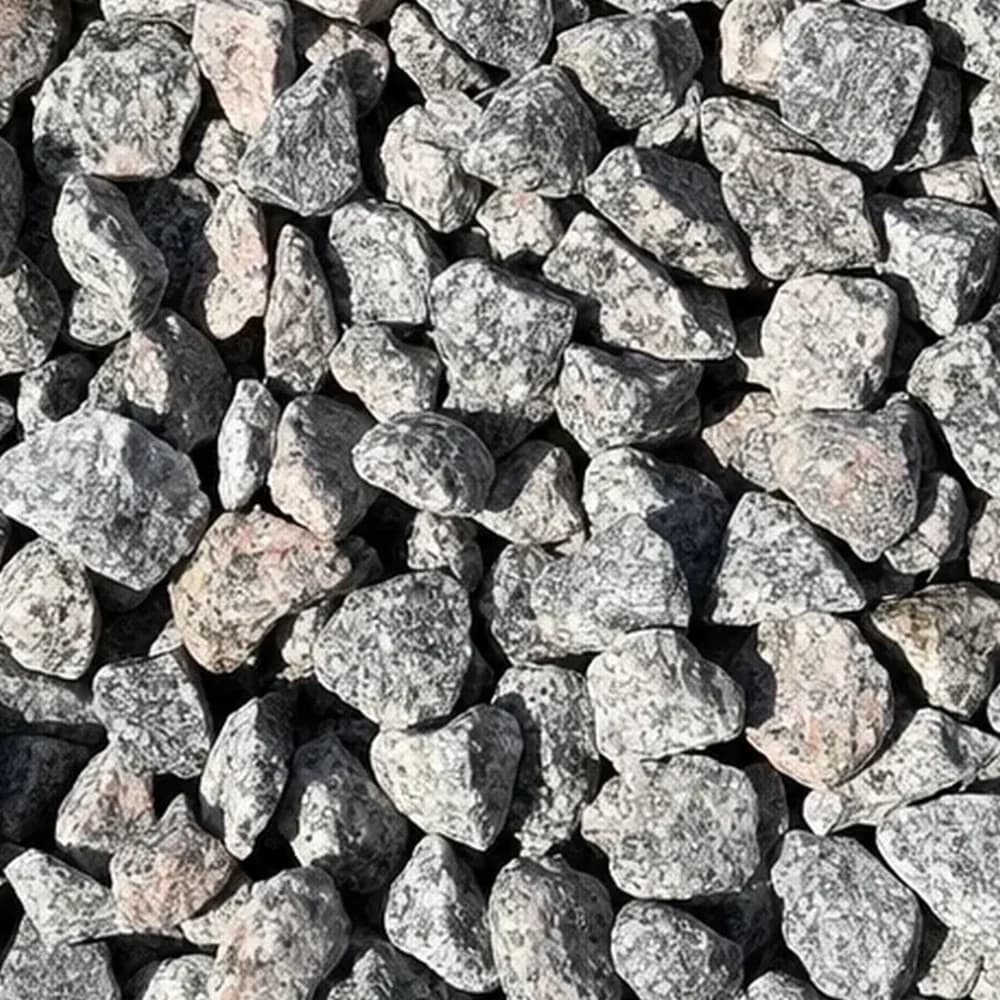
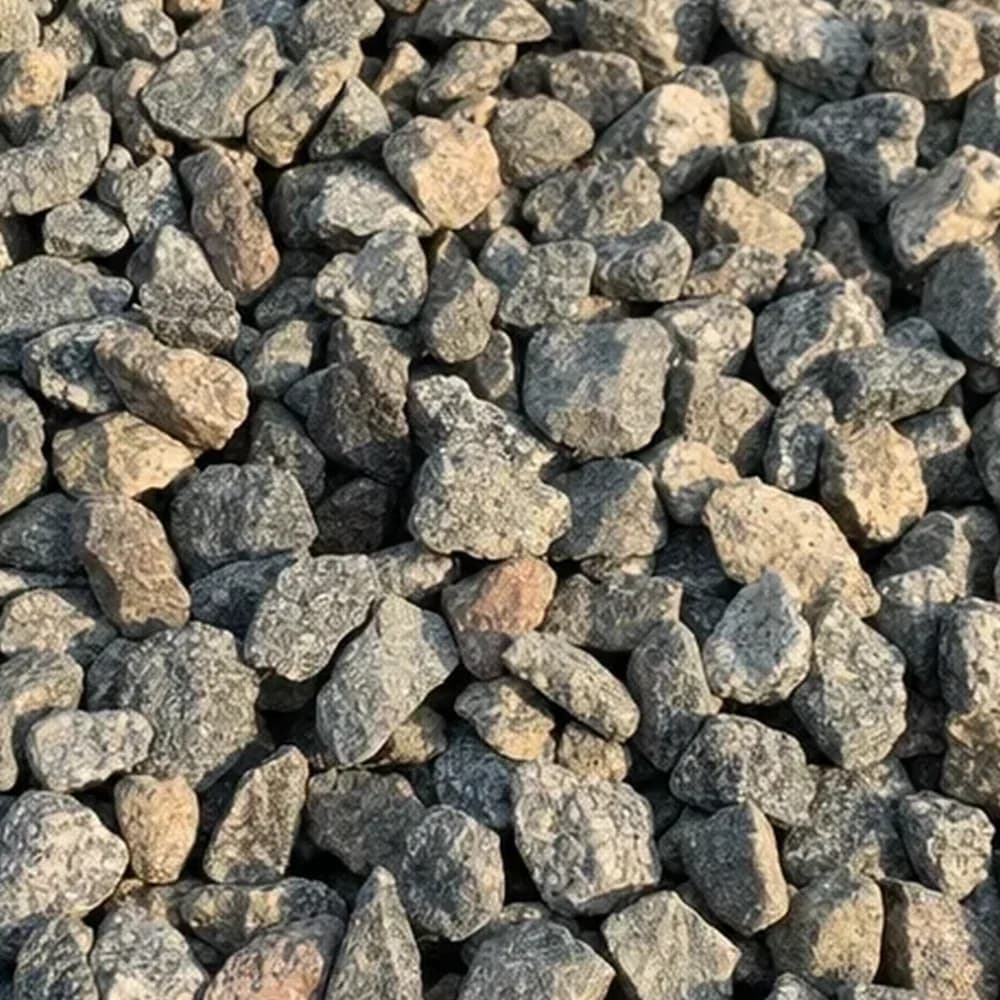
Gravel calculator for Montana
Find the cubic yards and tons for gravel or landscape rock work, identify the material to order, and receive free delivery.
Enter your project dimensions
For crushed gravel placed 2 inches deep, plan on about 116 square feet from each ton. Use the calculator by entering the area dimensions and depth, then choosing a gravel type; it calculates cubic yards, tons, and a delivered price. It can also estimate landscape rock, because crushed gravel, #57 stone, and similar products are generally near 2,800 lb per cubic yard.
Estimate the gravel quantity you need
- Use feet when measuring. Rectangles need length and width, while circles use the diameter. Treat an L-shaped driveway as two rectangles, then combine them with multiple-areas mode.
- Choose the depth in inches. Paths and surface refreshes usually use 2 to 3 inches. For a new driveway, place 4 to 6 inches in two courses rather than one pour.
- To convert, multiply area by depth in feet to get cubic feet. Divide that figure by 27 for cubic yards, then use 1.4 for tons.
Tons = cubic yards × 1.4 (crushed gravel at ~2,800 lb per cubic yard)
Useful weight and coverage reference figures
Dry crushed gravel typically weighs 2,800 lb in a cubic yard, which works out to 1.4 tons. A ton therefore equals about 0.71 cubic yards. Deeper installation reduces the area each ton will cover:
| Depth | 1 cubic yard covers | 1 ton covers |
|---|---|---|
| 2 inches | 162 sq ft | ≈ 116 sq ft |
| 3 inches | 108 sq ft | ≈ 77 sq ft |
| 4 inches | 81 sq ft | ≈ 58 sq ft |
| 6 inches | 54 sq ft | ≈ 39 sq ft |
| Material | Weight per cubic yard | Tons per yard |
|---|---|---|
| Driveway / walkway gravel | ≈ 2,800 lb | 1.40 |
| Pea gravel (3/8") | ≈ 2,800 lb | 1.40 |
| Crushed stone (#57, 3/4") | ≈ 2,800 lb | 1.40 |
| Crusher run / road base | ≈ 3,000 lb | 1.50 |
| River rock (1-3") | ≈ 2,700 lb | 1.35 |
Project depth guide
- Garden paths and walkways: use 2 to 3 inches of walkway gravel over compacted ground or fabric.
- Existing driveway refresh: Apply 2 inches of fresh surface gravel.
- New driveways: begin with 3 to 4 inches of compacted crusher run, followed by 2 to 3 inches of driveway gravel or #57. The lower layer supports traffic, while the finish layer manages water and provides the visible surface.
- Patios and seating areas: Use 2 to 3 inches within firm edging.
- French drains and wet areas: plan for 12 inches or more of clean stone. Calculate drainage material with the Stone Calculator, since washed rock without fines is called for.
Example calculation: a 50 x 10 ft driveway
For 500 square feet at 4 inches deep, the calculation is 500 x 0.333 = 167 cubic feet. Dividing by 27 gives 6.2 cubic yards, or 8.7 tons. Include 5% for compaction, then order about 9 tons, with roughly 60/40 allocated to crusher run base and surface gravel. In areas with deep frost, separating the base from the surface matters. A driveway measured precisely can still fail when a single 2-inch layer is placed directly over soil.
Common project estimates
Use these preliminary estimates before measuring, calculated at 1.4 tons per cubic yard:
| Project | Typical size | Depth | Volume | Weight |
|---|---|---|---|---|
| Single-car driveway pad | 20 x 10 ft | 4" | 2.5 yd³ | 3.5 tons |
| Two-car driveway | 24 x 20 ft | 4" | 5.9 yd³ | 8.3 tons |
| Country driveway | 50 x 12 ft | 6" | 11.1 yd³ | 15.6 tons |
| Garden path | 20 x 3 ft | 3" | 0.6 yd³ | 0.8 tons |
| Patio seating area | 12 x 12 ft | 3" | 1.3 yd³ | 1.9 tons |
| Shed base | 10 x 12 ft | 4" | 1.5 yd³ | 2.1 tons |
Four errors that lead to another delivery
- Leaving out the base on a new driveway. Gravel placed directly over soil may rut within a season, so put down the base layer before the surface gravel.
- Comparing proposals by square footage alone. A 20 x 10 pad may receive different prices solely because the depths vary, so compare matching tonnages.
- Less than 2 inches leaves too little cover. At one inch, gravel may be swallowed by mud once spring arrives.
- Leaving out the crown. Flat gravel holds water, while a 2% slope directs it away and helps keep fines in place.
Selecting gravel by surface use
Crushed, angular gravel binds together under vehicle weight, making it suited to areas with tire traffic. Rounded material such as pea gravel and river rock can shift and travel under load, so reserve it for walkways and planting areas. Build a lasting driveway with a compactable lower layer, like crusher run or road base, and a draining top layer, such as driveway gravel or #57. To compare two materials or identify material already in place, text a photo to (406) 626-8957 for identification.
How gravel is sold: yards, tons and truckloads
One pile can be described in three units. Cubic yards measure volume, while a ton measures 2,000 lb, equal to about 0.71 yards of gravel. Truckload capacity varies: a single-axle dump truck carries 8 to 10 yards, and a tandem carries 12 to 16 yards (17 to 22 tons). Put every quote in the same unit, preferably tons, before comparing prices. Compare the delivered total as well, since hauling can account for half the aggregate cost. Montana Rock Supply includes free delivery on every order, so the per-ton product price is what applies at your driveway.
Measuring irregular driveways
For a curved drive, measure its length down the centerline and use the average width. A rounded turnaround can be treated as a circle by taking its widest point for the diameter. On sloped ground, deepen the base at the downhill end, where runoff and gravel tend to collect. If a layout is difficult to tape, divide it into rectangles and combine the sections in multiple-areas mode.
Preparing for delivery
- Choose the unloading location before the truck arrives: stable ground with no low wires or septic field crossings.
- Set the delivery pile near the placement area. Moving a yard takes 9 to 14 wheelbarrow loads, and an added 10 feet matters when handling 6 yards.
- Before unloading onto pavement worth protecting, put down a tarp. It can reduce cleanup from an afternoon to ten minutes.
- Pack the base layer before adding the surface material. A rented plate compactor is an option, and truck tires can help when needed.
Gravel questions with numerical answers
What does 1 ton of gravel cover?
How can I calculate the gravel I need?
How much gravel covers a 10x10 area?
How many gravel yards equal a ton?
What is the size of a gravel truckload?
What is the cost of a yard of gravel?
Do I need extra material for compaction?
Can gravel be installed directly over grass?
Other calculators
That tonnage is delivered free.
Driveway gravel, #57 and crusher run are sold by the ton and delivered throughout Montana.